2 min read · Updated
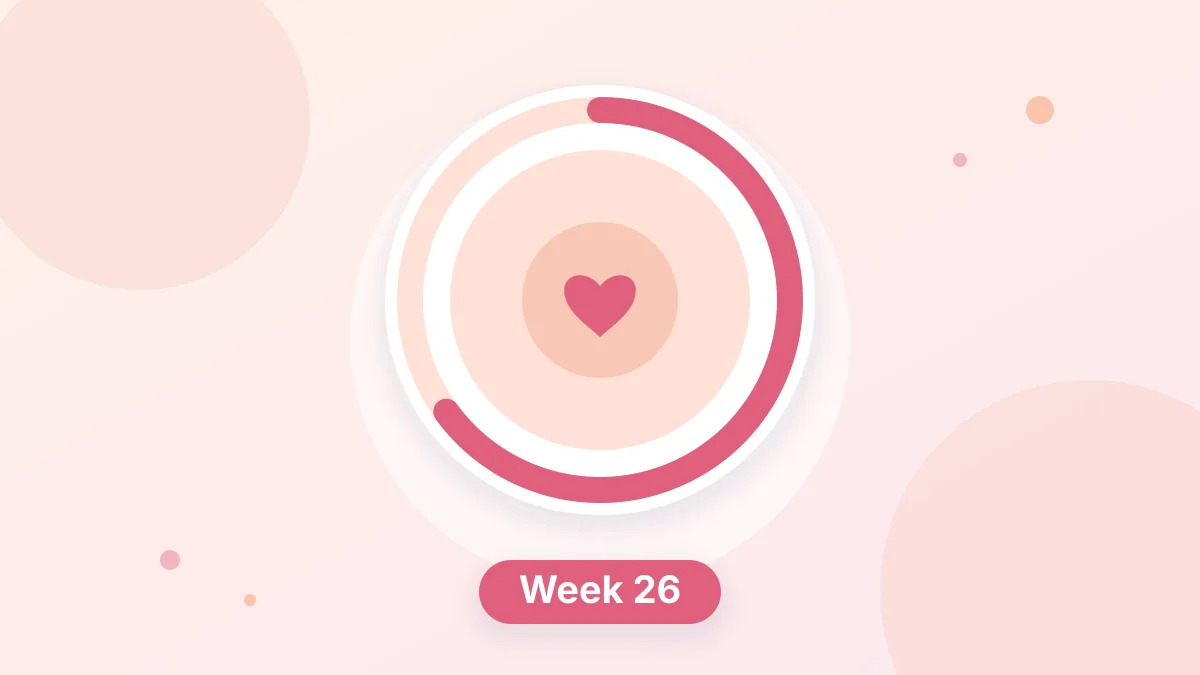
Twenty-six weeks is the final stretch of the second trimester. Your baby is growing steadily and you may be feeling clear kicks.
Your baby this week
Your baby is about 35 cm from head to heel and weighs around 760 grams. The eyes begin to open and blink, the lungs continue to develop and produce a substance called surfactant, and the baby's hearing is sharp, so they may startle at loud noises. Sleep and wake patterns are forming.
What you might feel
- Regular kicks, rolls and hiccups
- Backache and pelvic pain
- Tiredness and trouble sleeping
- Swelling in the feet and ankles
- Shortness of breath
- Heartburn and constipation
- Braxton Hicks tightenings
Checks coming up
- Your midwife will measure your bump and check your blood pressure and urine
- A glucose test may be offered between 24 and 28 weeks if you are at higher risk of gestational diabetes
- Around 28 weeks, a blood test for anaemia and, if you are rhesus negative, anti-D
What to do this week
- Plan your maternity leave and handover
- Look into antenatal classes and tours of your birth unit
- Keep active, and rest when you need to
- Eat iron-rich foods and drink enough water
- Learn the pattern of your baby's movements
When to get help
Call your maternity unit for bleeding, regular painful contractions, fluid leaking, severe headache with vision changes, severe itching, or reduced or changed movements. Do not wait.
Frequently asked questions
Is it normal to feel breathless?
Yes, as your womb presses upwards. Slow down and rest. Get urgent help if it is sudden or severe.
Will my baby survive if born now?
Babies born this early can survive with specialist care, but most pregnancies continue to term.
What if I do not feel kicks?
Contact your maternity unit the same day.
Sources: NHS guidance on weeks 25 to 28 of pregnancy and gestational diabetes.
This article is for general information, not medical advice. If you're worried about your health, talk to a doctor or other clinician.