1 min read · Updated
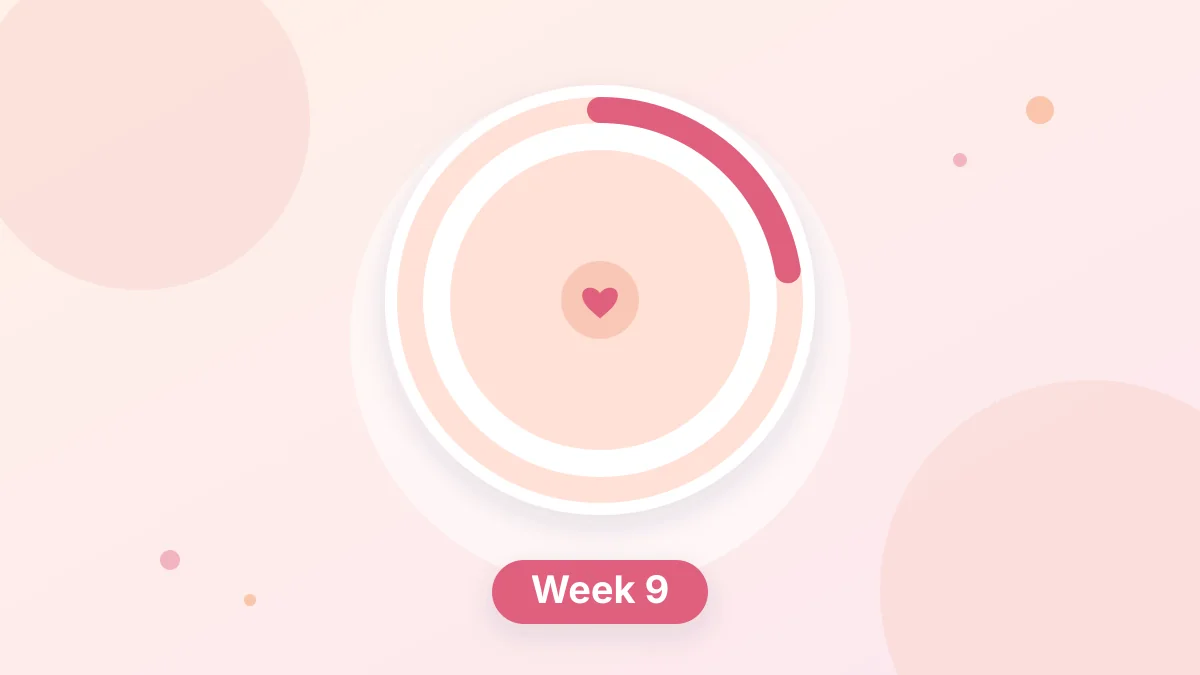
Nine weeks is well into the first trimester. Your baby is growing fast and your symptoms may be at their strongest.
Your baby this week
Your baby is about the size of a cherry, roughly 2 to 2.5 cm from head to bottom. The tiny fingers and toes are forming, the eyelids and ears are taking shape, and the heart has four chambers. All the main organs have started to develop, and the baby moves, though you will not feel it for a while.
What you might feel
- Nausea and sickness
- Tiredness and mood swings
- Tender breasts and darker nipples
- Needing to pass urine often
- Bloating, constipation and wind
- Food cravings and aversions
- Headaches
- Visible veins and skin changes
What to do this week
- Eat small, frequent meals and sip fluids
- Take folic acid and vitamin D
- Keep in contact with your midwife, and attend your booking appointment if you have not yet
- Get rest and ask for help
- Avoid alcohol and smoking
- Gentle exercise, such as walking, helps energy and mood
Looking ahead
Your dating scan is usually offered between 8 and 14 weeks, and screening tests around 10 to 14 weeks. Think about what you would like to do and ask your midwife for information.
When to get help
Call your midwife or doctor for bleeding, severe pain, dizziness, fainting or vomiting so much that you cannot keep anything down. See our article on hyperemesis gravidarum.
Frequently asked questions
Is it normal to feel low?
Hormones and tiredness can affect mood. Tell your midwife if low mood persists.
Can I have sex?
Yes, unless advised otherwise.
Will my sickness stop soon?
For many people it eases around 12 to 14 weeks, but it can last longer.
Sources: NHS guidance on weeks 9 to 12 of pregnancy and common pregnancy symptoms.
This article is for general information, not medical advice. If you're worried about your health, talk to a doctor or other clinician.