1 min read · Updated
What is the difference?
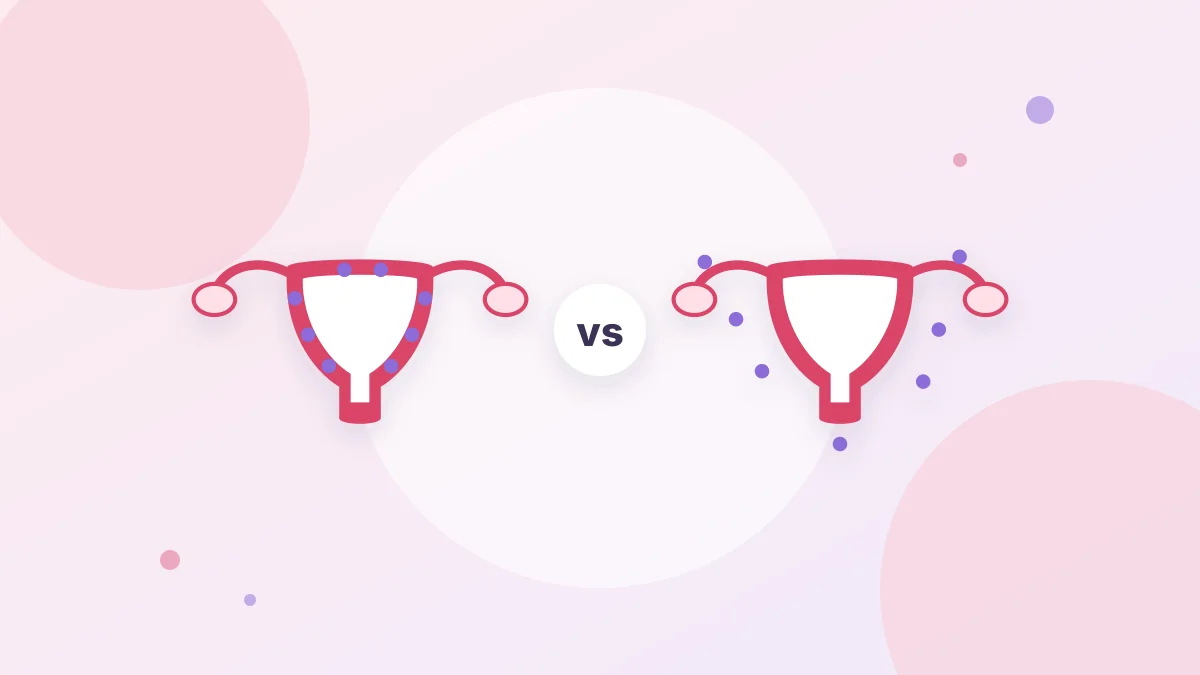
Both conditions involve tissue similar to the lining of the uterus, the endometrium, growing where it should not.
- Endometriosis: the tissue grows outside the uterus, such as on the ovaries, tubes and the lining of the pelvis.
- Adenomyosis: the tissue grows into the muscular wall of the uterus itself.
They can occur together.
Symptoms they share
- Painful periods
- Heavy or long periods
- Pelvic pain
- Pain during sex
- Fatigue
- Difficulty getting pregnant (more consistently linked with endometriosis)
Differences
- Adenomyosis typically causes heavy bleeding and an enlarged, tender uterus, and is most diagnosed in people in their 30s and 40s who have had children.
- Endometriosis more often causes pain outside periods, bowel and bladder symptoms, and can affect people from their teens.
Diagnosis
- Adenomyosis: pelvic ultrasound or MRI
- Endometriosis: often needs a laparoscopy to confirm, though ultrasound or MRI can detect some forms
Treatment
- Pain relief and anti-inflammatory medicines
- Hormonal treatments, such as the pill, hormonal IUD or progestins
- Surgery to remove endometriosis, or for adenomyosis, hysterectomy in severe cases
Frequently asked questions
Do either go away after menopause?
Symptoms usually improve because estrogen falls.
Can I get pregnant with either?
Often yes, though fertility treatment can help if needed.
Track pain and bleeding in Masik to help your doctor.
This article is for general information, not medical advice. If you're worried about your health, talk to a doctor or other clinician.