2 min read · Updated
Your baby's weight, length and head size are measured and plotted on charts in their personal child health record, the red book. Understanding the charts can ease worry.
What the charts show
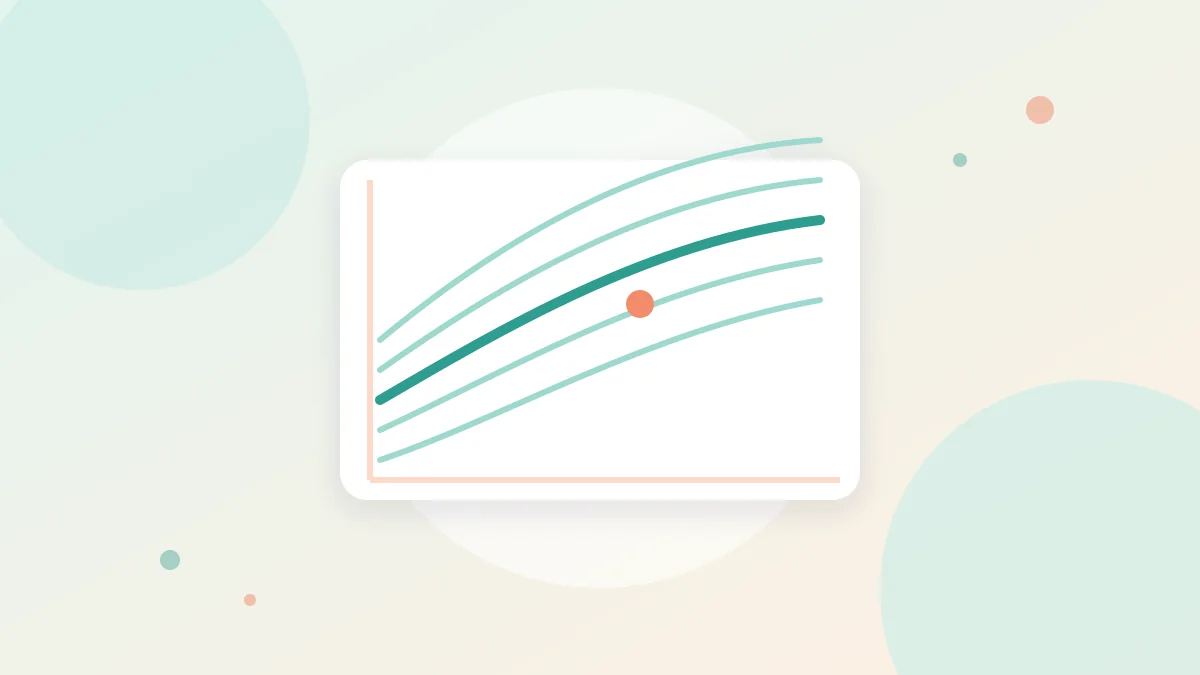
Growth charts have curved lines called centiles. If your baby is on the 50th centile for weight, then out of 100 babies the same age and sex, 50 would weigh more and 50 less. Healthy babies fall anywhere between the lowest and highest lines. In the UK, charts are based on the World Health Organization growth standards for breastfed babies.
What matters most is your baby's pattern over time, not one number. Most babies follow roughly the same centile line, or settle onto one in the first year.
Weight in the first weeks
- Most babies lose some weight in the first days, up to about 10 percent of their birth weight
- Most regain their birth weight by about 2 weeks, and gain steadily afterwards
- Your midwife or health visitor will weigh your baby in the early weeks, and then at specific times, rather than all the time, because frequent weighing can cause worry
What is normal after that
Babies gain weight at different rates, and often grow in spurts. A baby may cross centile lines in the first months, especially if they were born small or large, and that can be normal. Babies who are breastfed tend to gain weight a bit slower after the first few months than formula-fed babies.
When to ask for help
Speak to your health visitor or doctor if:
- Your baby has not regained birth weight by about 3 weeks
- Weight falls across two or more centile lines
- Your baby is feeding poorly, is very sleepy or has few wet nappies
- Your baby's head is growing very quickly or very slowly
- You are worried
They will check feeding, look for other causes, and may arrange tests or extra support.
What helps healthy growth
- Feed responsively, on demand, in the first months
- Start solid food at around 6 months
- Attend routine reviews and vaccinations
- Keep a record of feeds and nappies if you are worried
Frequently asked questions
Is a high centile bad?
Not necessarily. A big baby who follows their own line is usually fine.
Should I weigh my baby at home?
Not usually needed, as it can be misleading. Rely on routine checks.
Does a low centile mean there is a problem?
Not by itself. Look at the trend and how your baby is doing.
Sources: NHS guidance on baby weight and growth, and the Royal College of Paediatrics and Child Health UK-WHO growth charts.
This article is for general information, not medical advice. If you're worried about your health, talk to a doctor or other clinician.


