3 min read · Updated
A period that does not arrive on time can be stressful, especially when a pregnancy test is negative. The good news is that pregnancy is only one of many explanations. This guide explains why a period can be late, what to check first, and when to see a doctor.
When is a period considered late?
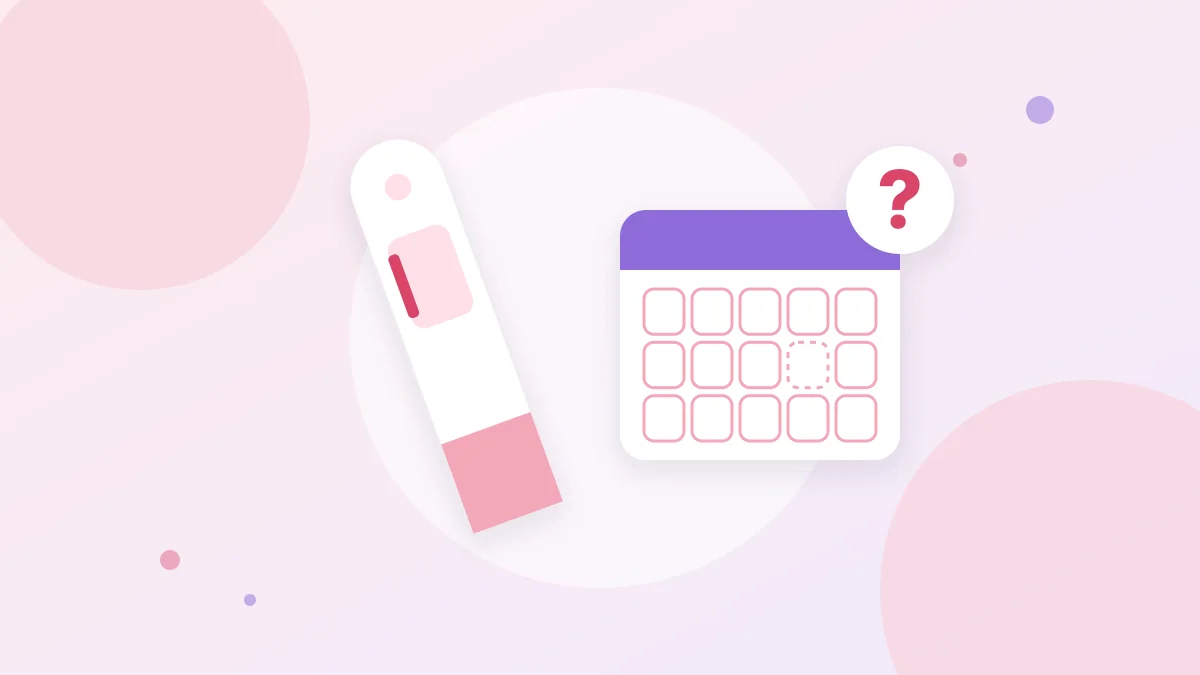
A period is generally considered late if it has not started within about five to seven days of when you expected it. If you have missed it entirely for six weeks or more, doctors call it a missed period. Because cycles naturally vary by a few days, your pattern over several months is a better guide than one date.
First step: retest
A negative test taken too early can be wrong. If your period is still absent, test again after three to seven days, using first morning urine. If you tested on the day of your expected period and it was negative, but your period has still not started, test again a few days later.
Common reasons for a late period (when you are not pregnant)
1. Stress. Emotional or physical stress can delay ovulation, which delays your period.
2. Weight changes. Losing or gaining weight rapidly can disturb cycles.
3. Intense exercise. Heavy training with insufficient fuel can stop ovulation.
4. Illness. Even a bad cold or infection can push ovulation back.
5. Travel and routine changes. Time zones, shift work and disrupted sleep can shift your cycle.
6. Polycystic ovary syndrome (PCOS). Irregular or absent ovulation is a main feature.
7. Thyroid conditions. Both overactive and underactive thyroid affect periods.
8. Hormonal contraception. Starting, stopping or changing the pill, implant, injection or hormonal IUD can alter your bleeding. Some methods stop periods entirely.
9. Emergency contraception. It can shift the timing of your next period.
10. Breastfeeding. Prolactin can suppress ovulation.
11. Perimenopause. Cycles become irregular in the years before menopause.
12. Medicines. Some antidepressants, antipsychotics, steroids and chemotherapy can affect periods.
Late ovulation: the simplest explanation
Your period arrives about two weeks after ovulation. If ovulation happened later than usual, perhaps because of stress or illness, your period will arrive later too, even though nothing is wrong. Tracking cycle signs such as cervical mucus or basal body temperature in Masik can show whether you ovulated late.
What you can do now
- Retest in a few days if there is any chance you are pregnant
- Think about recent stress, illness, travel or weight changes
- Log any symptoms such as cramps, breast tenderness or spotting
- Keep tracking your cycle so you can see how late you really are
- Look after yourself with regular meals, sleep and gentle activity
When to see a doctor
- No period after six weeks with negative tests, or three missed periods in a row
- A positive pregnancy test with pain or bleeding
- Severe pelvic pain, dizziness or fainting
- Signs of other conditions, such as excess hair, acne, milk from the breasts, hot flashes or headaches with vision changes
- You have never had a period by age 15
What the doctor may do
They will ask about your cycle, health and lifestyle, and may check a pregnancy test, blood tests for thyroid, prolactin and other hormones, and a pelvic ultrasound.
Frequently asked questions
How late can a period be without being pregnant?
It can be late by weeks, particularly with stress or conditions such as PCOS. If you miss several in a row, see a doctor.
Can stress delay my period by a month?
Yes, severe or prolonged stress can delay ovulation by weeks.
Can I be pregnant with a negative test?
Yes, if you tested too early. A repeat test a few days later is more reliable.
Can the pill make my period late?
Starting, stopping or missing pills can alter bleeding, and some people have no withdrawal bleed.
Is it normal to have period symptoms but no period?
Yes, hormones can cause cramps and bloating even when bleeding is delayed.
Logging your periods in Masik makes it easy to see how late you really are compared with your usual cycle.
This article is for general information, not medical advice. If you're worried about your health, talk to a doctor or other clinician.