3 min read · Updated
Newborn jaundice is a yellowing of the skin and eyes that affects around 6 in 10 babies in the first week of life. Most cases are harmless and fade on their own, but some need treatment. This guide explains why jaundice happens, how to recognise it, and when to seek help.
What is newborn jaundice?
Jaundice is caused by a build-up of bilirubin, a yellow substance made when red blood cells are broken down. Adults and older children clear bilirubin through the liver. In newborns, the liver is still maturing and cannot process it quickly. Babies also have more red blood cells that turn over faster, so bilirubin can build up and give a yellow tinge.
Types of newborn jaundice
- Physiological jaundice: the common type, appearing on day 2 to 3, peaking around day 4 to 5 and fading by two weeks.
- Breastfeeding jaundice: when a baby is not taking enough milk in the first days, so bilirubin is not flushed out. More frequent feeding helps.
- Breast milk jaundice: can last longer, up to several weeks, in healthy breastfed babies.
- Pathological jaundice: appears within the first 24 hours or is unusually severe, caused by blood group incompatibility, infection, or inherited conditions.
How to spot jaundice
- Yellow skin that starts on the face and moves down the chest, belly and legs
- Yellowing of the whites of the eyes
- Pale stools and dark urine, in more serious cases
- A sleepy baby who feeds poorly
Check in natural daylight. Press gently on your baby's nose or forehead. If the skin looks yellow when you release, it may be jaundice. In babies with darker skin, check the whites of the eyes, gums and the soles of the feet.
When to get help
Seek urgent medical advice if:
- Jaundice appears within the first 24 hours
- Your baby is very sleepy, hard to wake, or feeding poorly
- The yellow colour is getting deeper or spreading to the arms and legs
- The baby is jaundiced after two weeks (three weeks if premature)
- Stools are pale, or urine is dark
- Your baby has a fever or seems unwell
How is it tested?
A midwife may use a light meter on the skin (a transcutaneous bilirubinometer). If the reading is high, a small blood test measures the exact bilirubin level, and the result is compared with charts for your baby's age.
Treatment
Most jaundice needs no treatment. When levels are high, treatment includes:
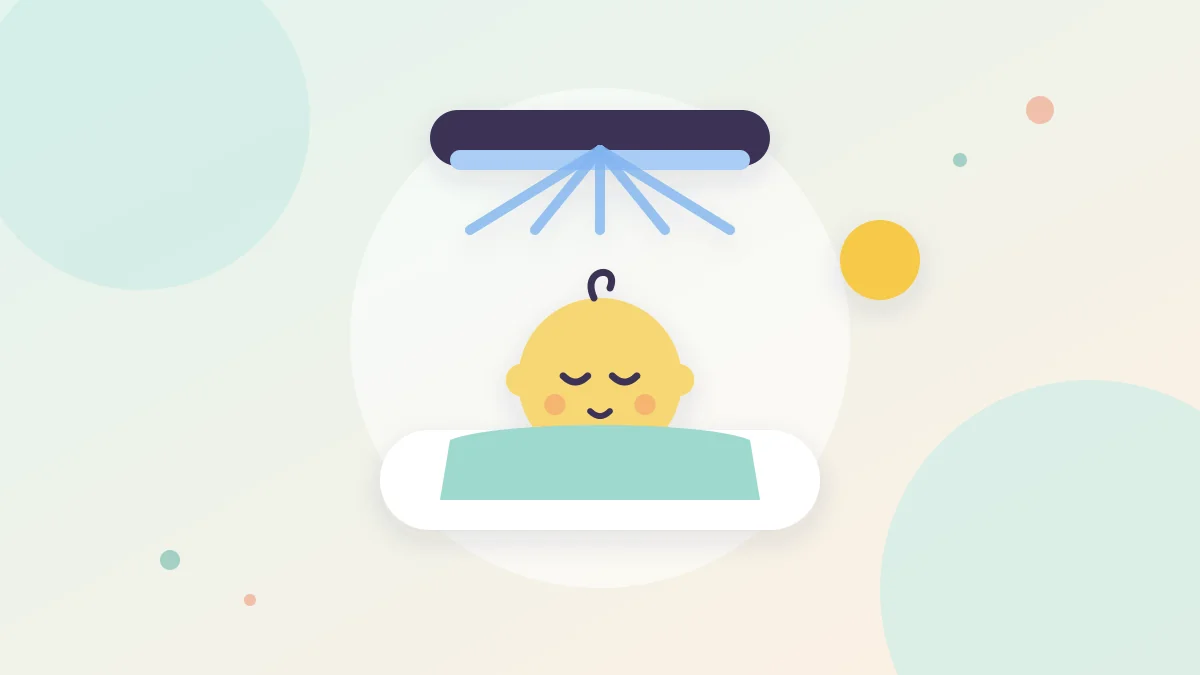
- Phototherapy, where your baby lies under special blue light, wearing only a nappy and eye protection. The light changes bilirubin into a form that can be passed in urine and stool. It is safe and often needs one to two days.
- Frequent feeding, every two to three hours, to help clear bilirubin.
- Exchange transfusion, very rarely, for dangerously high levels.
Sunlight is not a safe treatment, because it can burn a baby's skin.
Why treatment matters
Very high bilirubin can reach the brain and cause lasting damage (kernicterus), but this is rare when jaundice is checked and treated in time.
Frequently asked questions
Is newborn jaundice dangerous?
Usually not. It becomes dangerous only if bilirubin is very high and not treated.
Can I keep breastfeeding with jaundice?
Yes. Frequent feeding helps clear bilirubin, and you should continue unless advised otherwise.
How long does jaundice last?
Usually one to two weeks. Longer needs a check.
Are some babies more at risk?
Premature babies, babies with bruising, blood group differences, or a sibling who had jaundice are more at risk.
Does jaundice cause long-term problems?
Not when it is treated promptly.
If you are worried about your baby's colour or feeding, contact your midwife or doctor straight away.
This article is for general information, not medical advice. If you're worried about your health, talk to a doctor or other clinician.


