3 min read · Updated
Sudden infant death syndrome (SIDS), also called cot death, is the sudden, unexpected death of a baby with no clear cause. It is rare, and the risk can be lowered with a few simple steps. Most of the advice below applies to the first year, when the risk is highest, especially in the first six months.
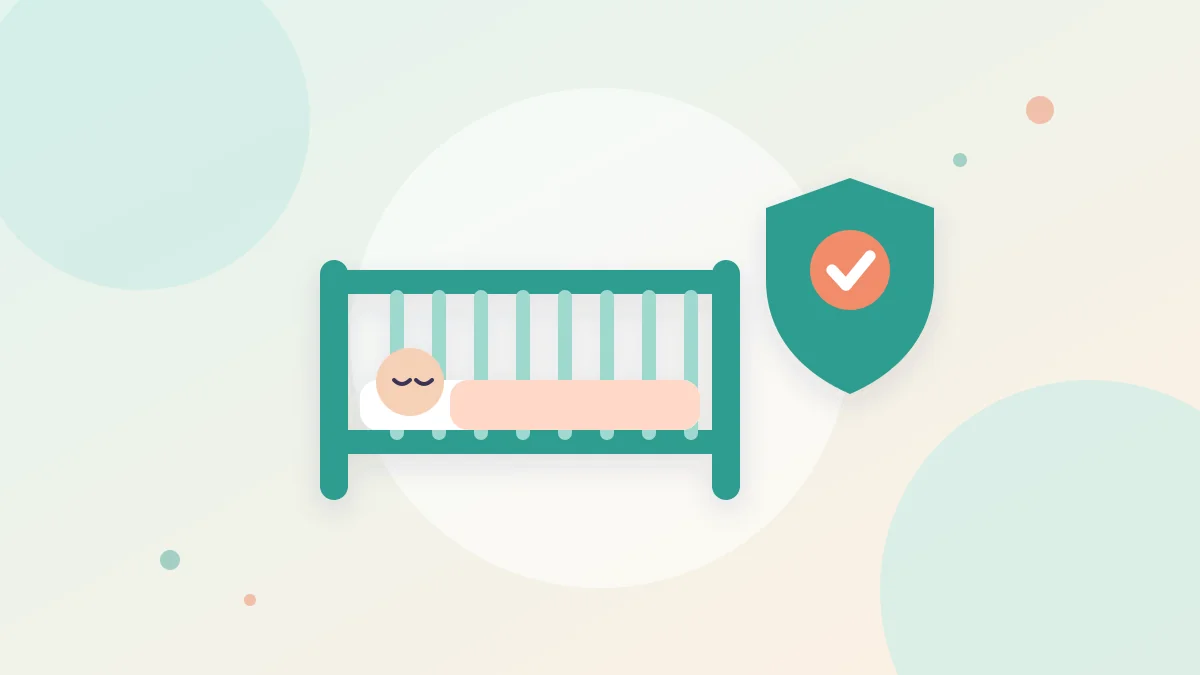
The safest way for your baby to sleep
- On their back, for every sleep, day and night. Once your baby can roll from back to front and back again on their own, they can find their own position.
- On a firm, flat, waterproof mattress in a cot or Moses basket, with no raised or sloping surface.
- With feet at the foot of the cot, so they cannot wriggle under the covers.
- With nothing loose in the cot. That means no pillows, duvets, cot bumpers, soft toys or sleep positioners. Use a lightweight, fitted blanket tucked in no higher than the shoulders, or a baby sleeping bag.
- In the same room as you for the first six months, for day and night sleeps.
- Without a hat or hood indoors, as babies cool themselves through their heads.
Keeping the room comfortable
A room temperature of around 16 to 20 degrees Celsius is comfortable. Do not use too many layers. Check that your baby's chest or the back of their neck is not hot or sweaty. Cold hands and feet are normal.
Things that raise the risk
- Smoking during pregnancy or around your baby. Keep your home and car smoke-free. Ask your midwife for help to quit.
- Sleeping with your baby on a sofa or armchair. This is especially dangerous. If you feel you may fall asleep, put your baby on their back in their cot first.
- Bed sharing in some situations. The risk is higher if you or your partner smoke, have had alcohol, take drugs or medicines that make you drowsy, or are very tired. It is also higher if your baby was born early or is small.
- Overheating.
- Prematurity and low birth weight.
If you plan to bed share, make the bed safe: firm mattress, no pillows or duvets near your baby, no gaps, and do not leave a baby alone in an adult bed.
Things that lower the risk
- Breastfeeding, even for a short time.
- Using a dummy when settling to sleep, once feeding is established. Do not force it, and do not dip it in anything sweet.
- Having the cot in your room.
- Going to routine checks and vaccinations.
Car seats, slings and baby carriers
Car seats are for travelling and should not be used for routine sleep, as babies can slump. Take your baby out when you arrive. When using a sling, keep your baby's face visible and the chin off the chest.
When to get help
If your baby is unwell, too sleepy to feed, has trouble breathing or looks pale or blue, call emergency services. If your baby stops breathing, start infant CPR and call for help.
Frequently asked questions
Do monitors prevent SIDS?
No. There is no good evidence that monitors prevent SIDS, and they can cause worry. Safe sleep practices matter more.
Is it safe for my baby to sleep on their side?
No. Back sleeping is safest.
Is tummy time safe?
Yes, and it is encouraged while your baby is awake and supervised.
Sources: NHS and Lullaby Trust guidance on safer sleep for babies, and NICE guidance on postnatal care.
This article is for general information, not medical advice. If you're worried about your health, talk to a doctor or other clinician.


