2 min read · Updated
Menopause is a natural stage of life, when your ovaries stop releasing eggs and your periods stop. Technically, it is a single point in time: 12 months after your last period. People use the word more broadly to describe the whole change.
The stages
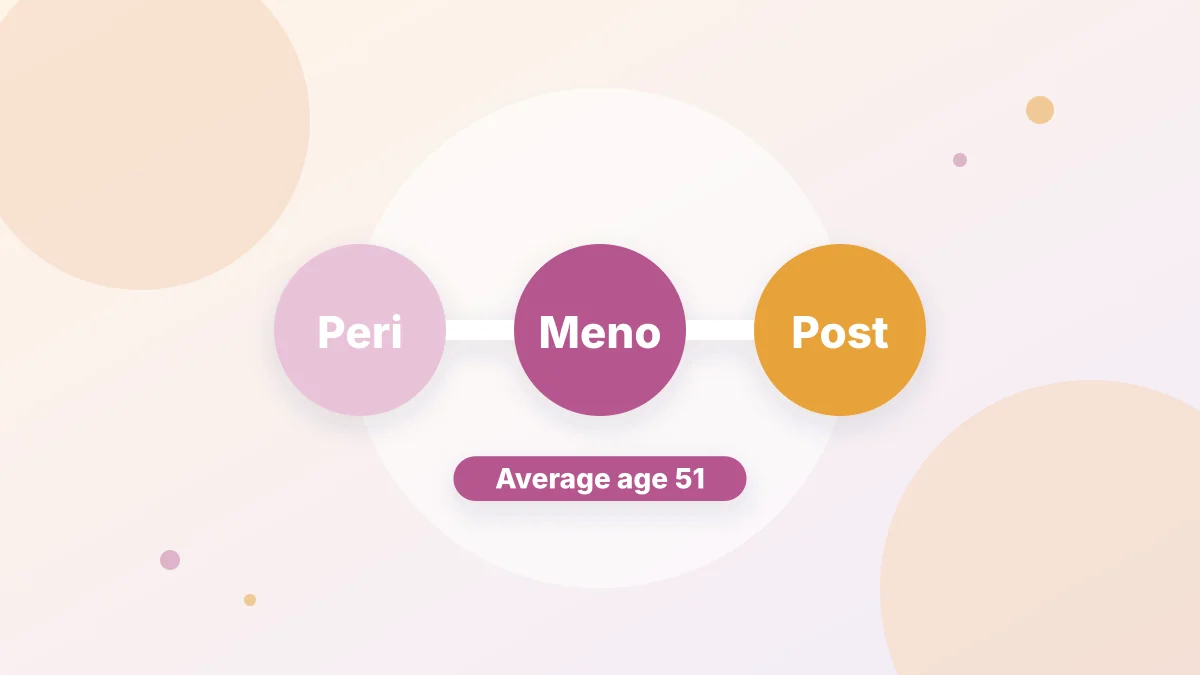
- Perimenopause: the years leading up to menopause, when hormone levels fluctuate and periods become irregular. Symptoms can start in your 40s, or sometimes earlier, and perimenopause lasts about 4 years on average, though it can be shorter or much longer
- Menopause: confirmed when you have not had a period for 12 months, and you are not pregnant
- Postmenopause: the years after menopause. Some symptoms, such as hot flushes, may continue for a while, and others, such as vaginal dryness, can persist or get worse without treatment
When does it happen?
The average age of menopause in the UK is 51, and most people reach it between 45 and 55.
- Early menopause: before age 45
- Premature ovarian insufficiency: before age 40. See our article on premature ovarian insufficiency
Smoking, some cancer treatments and surgery to remove the ovaries can bring on menopause earlier. Your mother's age at menopause is often a rough guide for your own.
What changes in the body
The ovaries make less oestrogen and progesterone. Lower oestrogen affects the brain, skin, bones, heart, bladder and vagina, which is why symptoms can be so varied.
Common symptoms
- Irregular periods, then none
- Hot flushes and night sweats
- Trouble sleeping
- Mood changes, anxiety or low mood
- Brain fog and memory lapses
- Vaginal dryness and sex pain
- Urinary symptoms
- Joint aches
- Headaches or palpitations
- Reduced sex drive
About 8 in 10 people have some symptoms, and about 1 in 4 find them severe. Some people have very few.
Do I need a test?
If you are over 45 with typical symptoms, a doctor can usually diagnose perimenopause or menopause without any tests. Blood tests, such as follicle stimulating hormone (FSH), are not reliable in the perimenopause, because levels fluctuate. They may be used if you are under 45, or in some other situations.
Getting help
See your GP if symptoms affect your life, if you are under 45, or if your bleeding changes in a way that worries you. Treatments such as hormone replacement therapy (HRT) are very effective. See our articles on HRT, non-hormonal options and managing symptoms.
Bleeding after menopause
Any bleeding after 12 months without a period must be checked. See our article on bleeding after menopause.
Frequently asked questions
Can I get pregnant in perimenopause?
Yes, until menopause is confirmed. Use contraception if you do not want to conceive.
How long do symptoms last?
On average, about 7 years, but it varies a lot.
Is menopause a disease?
No. It is a natural transition, though symptoms can need treatment.
Sources: NHS guidance on menopause, NICE guideline NG23, and the British Menopause Society.
This article is for general information, not medical advice. If you're worried about your health, talk to a doctor or other clinician.