2 min read · Updated
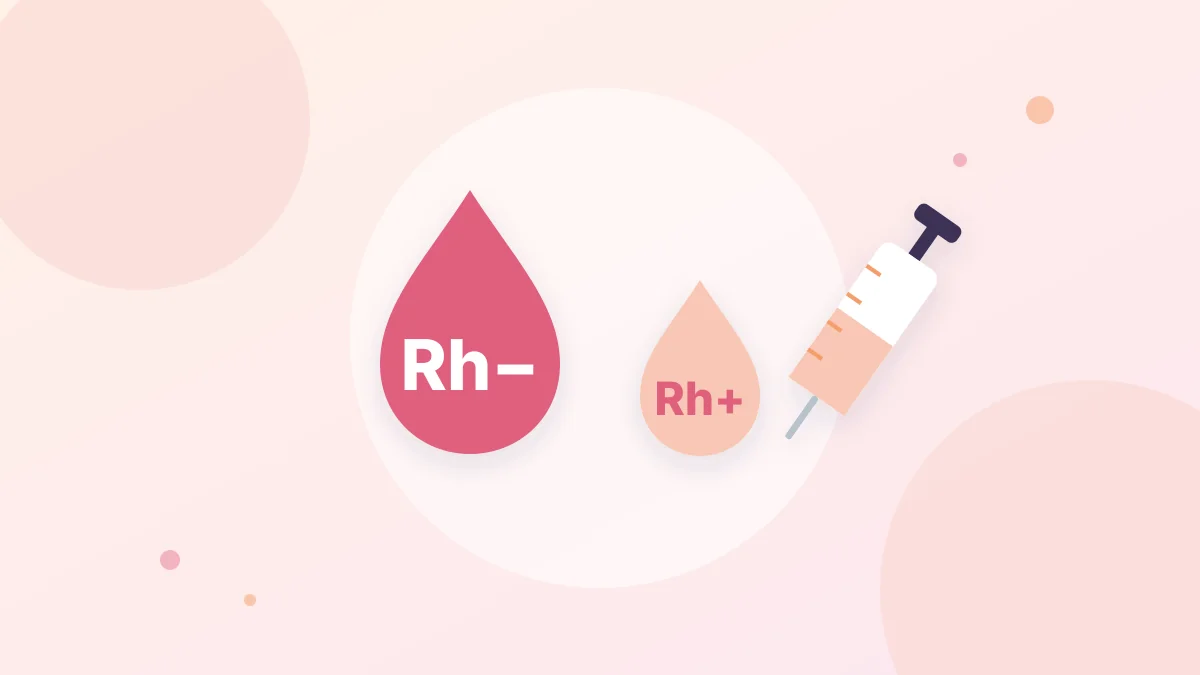
Your blood group has two parts: A, B, AB or O, and whether you are rhesus (Rh) D positive or negative. If you are RhD negative and your baby is RhD positive, your body can make antibodies against the baby's blood cells. This can cause problems in a later pregnancy, and the anti-D injection is how it is prevented.
Why does being RhD negative matter?
If a small amount of your baby's RhD positive blood crosses into your bloodstream, your immune system may treat it as foreign and make antibodies, called sensitisation. In a first pregnancy this rarely harms the baby, but the antibodies can attack the red blood cells of a later RhD positive baby and cause haemolytic disease of the newborn. Anti-D immunoglobulin stops sensitisation from happening.
How it is found
Your blood group and antibody screen are checked at your booking appointment, and your antibodies are usually rechecked at about 28 weeks. Some services also offer a blood test from about 16 weeks that predicts your baby's RhD type from your blood. If it shows the baby is RhD negative, you generally do not need anti-D in that pregnancy.
Routine anti-D in pregnancy
NICE guidance in England allows several ways to give routine antenatal anti-D:
- One dose of 1,500 IU at 28 weeks, or between 28 and 30 weeks
- Two doses at 28 and 34 weeks
Your hospital's own protocol decides which it uses. The injection goes into a muscle in your arm or thigh, and there is no evidence that it harms the baby.
Extra doses after sensitising events
You also need anti-D, as soon as possible and within 72 hours, after events when blood from the baby can enter your circulation, including:
- Vaginal bleeding in pregnancy
- Miscarriage or termination, including some early losses
- Amniocentesis, chorionic villus sampling or an external cephalic version to turn a breech baby
- A blow or injury to your abdomen
The routine 28-week dose still applies in addition. Tell your midwife or contact your maternity unit promptly if you have bleeding or an injury.
After the baby is born
Your baby's blood group is checked from the cord blood. If your baby is RhD positive, you are offered another dose of anti-D within 72 hours of the birth. If your baby is RhD negative, you do not need it.
Frequently asked questions
Is anti-D a blood product?
Yes. It is made from donated plasma, and the donors are screened, but you can ask your midwife about the process.
Do I need anti-D every pregnancy?
Yes, each pregnancy is treated separately.
What if I already have antibodies?
Your team will monitor you more closely, and anti-D does not remove existing antibodies.
Can the baby's father's blood group help?
If he is also RhD negative, your baby will be RhD negative, but this is not always certain, so follow your hospital's advice.
Sources: NICE technology appraisal TA156 on routine antenatal anti-D prophylaxis; NHS maternity trust guidance on RhD negative women.
This article is for general information, not medical advice. If you're worried about your health, talk to a doctor or other clinician.