2 min read · Updated
The contraceptive injection contains the hormone progestogen and prevents pregnancy for around 13 weeks at a time. It is a good option if you do not want to take a pill every day.
How it works
It stops the ovaries releasing an egg, thickens cervical mucus so sperm cannot reach an egg, and thins the womb lining.
How effective is it?
When it is given on time, it is more than 99 percent effective. In everyday use, about 4 in 100 people become pregnant in a year, mostly because a repeat injection was late.
How it is given
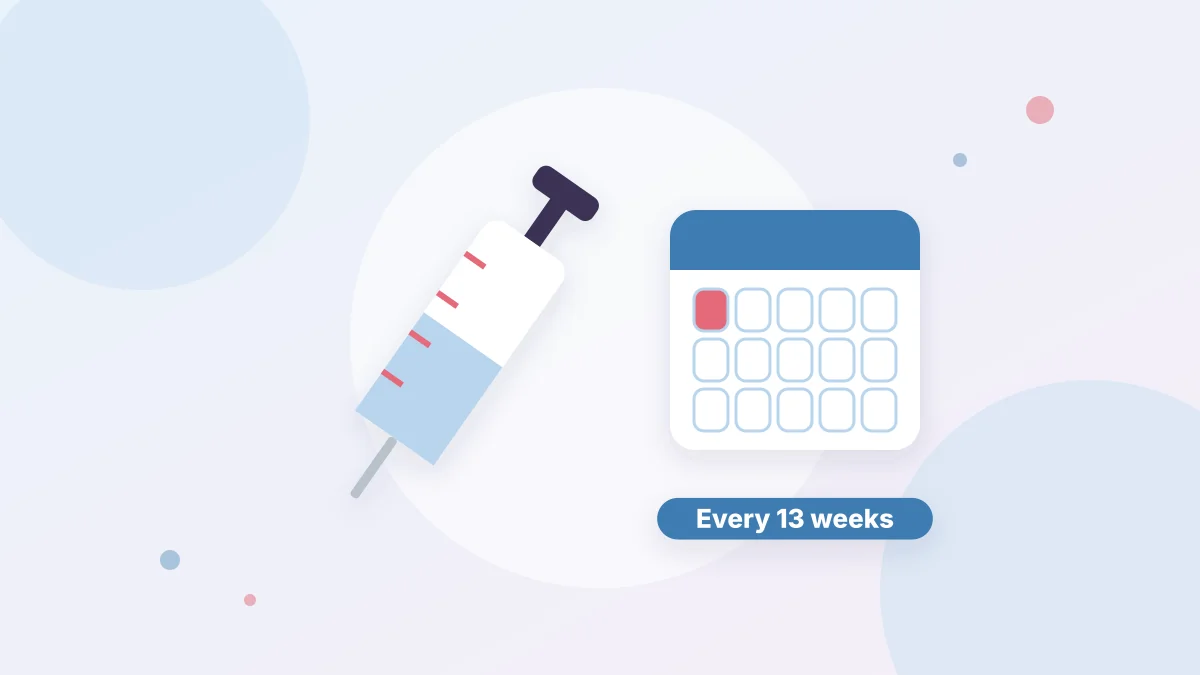
A nurse or doctor gives it as an injection into your buttock or upper arm, or you may be taught to inject yourself with a subcutaneous version (Sayana Press). Repeat doses are needed every 13 weeks, and you can have it up to 14 weeks after the last one in some cases. It works straight away if given in the first 5 days of your cycle. At other times you may need extra contraception for 7 days.
Benefits
- Lasts 13 weeks, with nothing to remember each day
- No oestrogen, so suitable for many people who cannot use the combined pill
- Periods often become lighter and may stop
- May reduce period pain and symptoms of endometriosis
- Can be used while breastfeeding
Side effects and risks
- Changes to bleeding: irregular bleeding is common at first, and many stop having periods.
- Weight gain: some people gain weight.
- Headaches, mood changes, acne, breast tenderness in some.
- Bone density: the injection can slightly lower bone density while you are using it. It usually recovers when you stop, and doctors consider this when advising younger people and those at risk.
- Delay in fertility: it can take up to a year, on average, to conceive after stopping, so it is not ideal if you plan to get pregnant soon.
It cannot be reversed once given, so side effects may last until it wears off.
Who may not be able to use it
Tell your clinician if you may be pregnant, have unexplained bleeding, have had breast cancer, have liver disease or serious risk factors for osteoporosis.
Frequently asked questions
Can I stop the injection if I do not like it?
You cannot remove it, so side effects can last as long as 13 weeks or longer.
Does it protect against STIs?
No. Use condoms for protection.
Will my periods return?
Yes, though it can take months after the last injection.
Sources: NHS guidance on the contraceptive injection, and Faculty of Sexual and Reproductive Healthcare guidance on progestogen-only injectables.
This article is for general information, not medical advice. If you're worried about your health, talk to a doctor or other clinician.