2 min read · Updated
What are the four phases of the menstrual cycle?
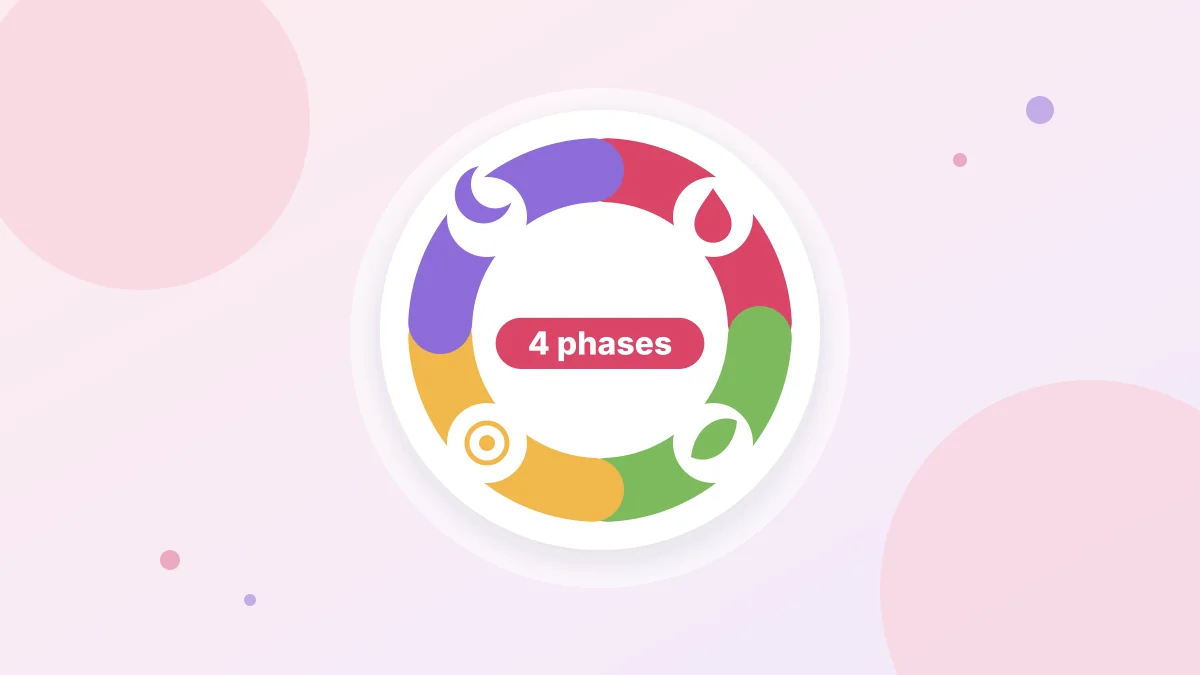
A menstrual cycle is the roughly monthly loop your body repeats, counted from the first day of one period to the day before the next. It has four phases: menstrual, follicular, ovulation and luteal.
1. Menstrual phase (about days 1 to 5)
This is your period. Because no pregnancy happened, the uterine lining built up in the previous cycle sheds. Estrogen and progesterone are at their lowest, which is why many people feel tired or low.
2. Follicular phase (day 1 to about day 13)
This phase starts on the first day of your period and overlaps with it. The pituitary gland releases follicle-stimulating hormone (FSH), prompting several follicles in the ovaries to start maturing. Rising estrogen rebuilds the uterine lining, and energy and mood often lift. The length of this phase is the main reason cycle lengths differ between people.
3. Ovulation (around day 14 in a 28-day cycle)
A surge in luteinizing hormone (LH) triggers the release of a mature egg. The egg survives about 12 to 24 hours, and ovulation is the most fertile point of the cycle. Many people notice clear, stretchy cervical mucus, mild one-sided pain or a slight rise in basal body temperature.
4. Luteal phase (ovulation to your next period)
The ruptured follicle becomes the corpus luteum and makes progesterone, preparing the lining for a possible pregnancy. This phase typically lasts 12 to 14 days and is fairly consistent from cycle to cycle. If the egg is not fertilised, hormone levels fall and the cycle starts again. PMS symptoms usually appear in the late luteal phase.
How long is a normal cycle?
Anywhere from 21 to 35 days is considered typical, and it can vary a little from cycle to cycle. Tracking your own pattern over a few months is more useful than comparing yourself to a textbook 28 days.
Frequently asked questions
Which phase is the longest?
The follicular phase varies the most, so it is usually the longest and the most variable. The luteal phase is steadier.
When am I most fertile?
In the five days before ovulation and on the day of ovulation.
Can a cycle skip a phase?
If you do not ovulate (an anovulatory cycle), you can still bleed, but the luteal phase does not happen in the usual way.
Log your period and symptoms in Masik to see which phase you are in each day.
This article is for general information, not medical advice. If you're worried about your health, talk to a doctor or other clinician.