1 min read · Updated
The basics
Sleep quality genuinely fluctuates across the menstrual cycle, and it's not a coincidence — both estrogen and progesterone influence sleep architecture.
Progesterone has a mild sedative effect, and its rise during the luteal phase can actually make some people feel sleepier than usual. But right before a period, when both progesterone and estrogen drop sharply, that effect goes away — combined with physical symptoms like cramps and bloating, this is when sleep disruption tends to be most common.
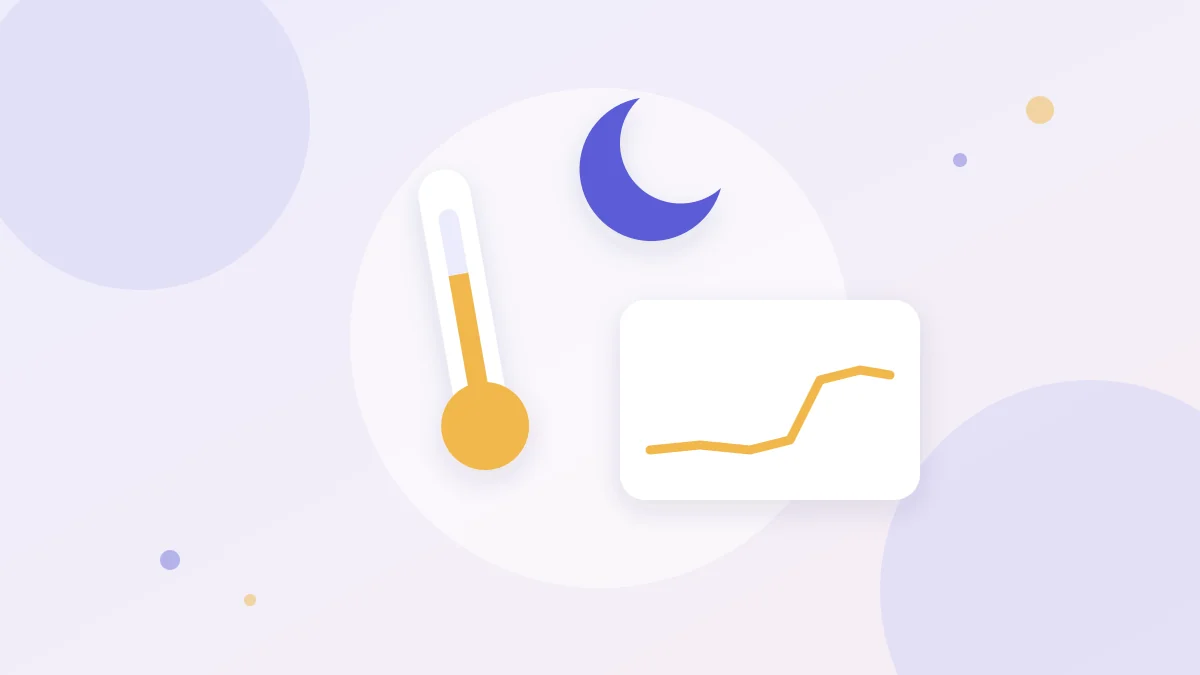
A slight rise in core body temperature during the luteal phase (roughly 0.5°F, the same shift used to help confirm ovulation after the fact) can also make it harder to fall into deep sleep, since the body naturally sleeps best when core temperature is dropping.
For some people, sleep disruption is one of the more noticeable and disruptive PMS symptoms — and for those with PMDD, sleep problems are recognized as one of the possible symptoms.
If poor sleep is consistently clustering in the same phase of your cycle, that's worth noting: it points toward a hormonal cause rather than an unrelated sleep issue, and knowing that can shape which strategies (or whether a doctor's visit) will actually help.
Frequently asked questions
Why do I sleep worse before my period?
Progesterone falls, body temperature stays higher and PMS symptoms can disturb sleep.
Does exercise help?
Regular daytime exercise generally improves sleep, though avoid intense workouts right before bed.
This article is for general information, not medical advice. If you're worried about your health, talk to a doctor or other clinician.