1 min read · Updated
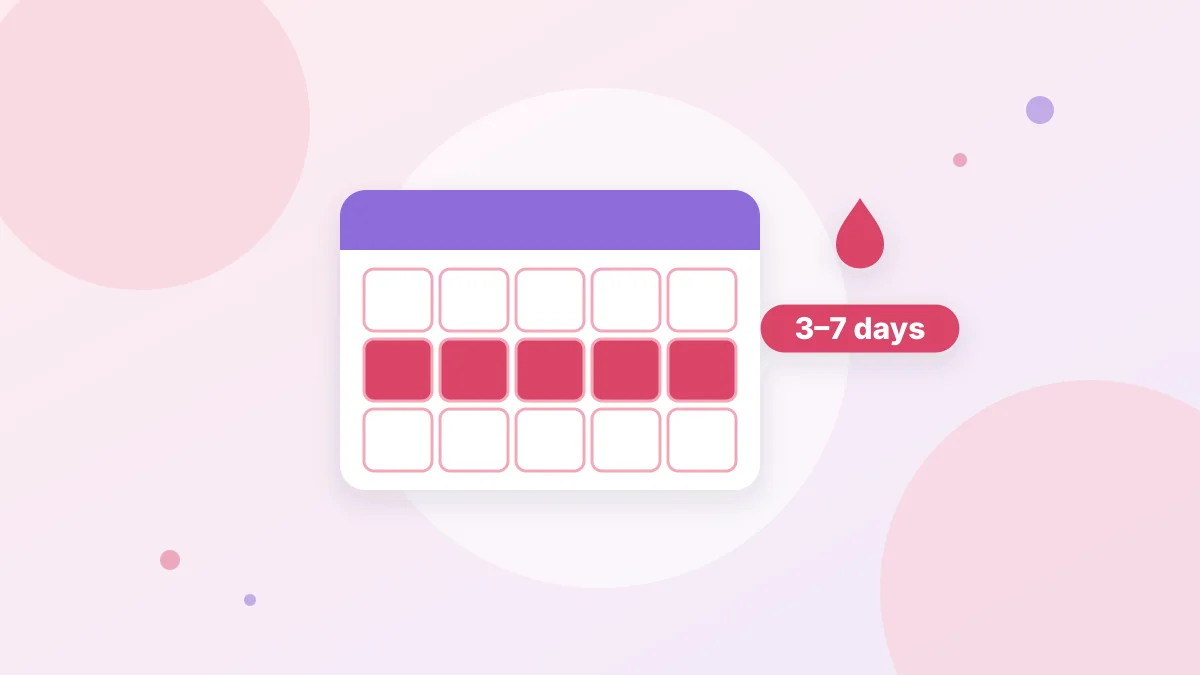
For most people a period lasts between three and seven days, and the whole cycle from one period's first day to the next is typically 21 to 35 days.
What varies
Length changes with age, hormones, stress, weight, and birth control. In the first years after your first period and in the years before menopause, periods are often more variable.
Counts as typical
- Bleeding for 2 to 7 days
- Heavier flow on the first two days, tapering after that
- Occasional light spotting at either end
Worth discussing with a doctor
- Periods regularly longer than 7 days
- Bleeding that is very heavy, or soaks a pad or tampon every hour
- Periods much shorter than usual (one day or less) when this is new for you
- Cycles shorter than 21 days or longer than 35 days
- Bleeding between periods
How to tell what is normal for you. Your own pattern matters more than the average. A period that lasts 3 days every cycle can be perfectly healthy, and so can one that lasts 6. Logging the first and last day of each period in Masik shows your personal range and makes any change easy to spot.
If a change lasts for more than a few cycles, or comes with pain, dizziness or tiredness, it is worth getting checked. Many causes, such as thyroid changes or fibroids, are treatable.
Frequently asked questions
Is a two-day period okay?
It can be normal for you if it is consistent, but a sudden change is worth checking.
What if mine lasts over a week?
See a doctor, as long periods can have treatable causes.
This article is for general information, not medical advice. If you're worried about your health, talk to a doctor or other clinician.