1 min read · Updated
What is IVF?
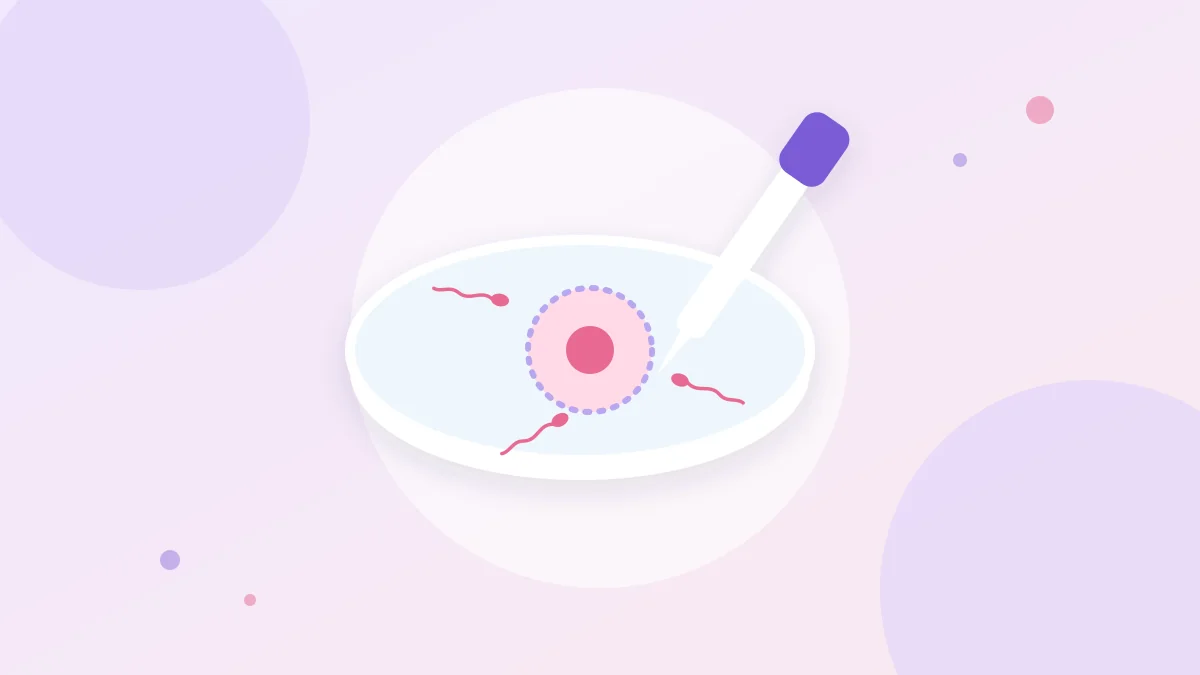
In vitro fertilisation (IVF) is a treatment in which eggs are collected from the ovaries, fertilised with sperm in a laboratory, and the resulting embryo is placed in the uterus.
The main steps
1. Ovarian stimulation: daily hormone injections for around 8 to 14 days help several eggs mature, with scans and blood tests to monitor progress.
2. Trigger injection: a final injection prepares the eggs for collection.
3. Egg collection: a minor procedure under sedation, taking about 20 to 30 minutes.
4. Fertilisation: eggs and sperm are combined, or a single sperm is injected into an egg (ICSI).
5. Embryo development: embryos grow in the lab for 3 to 6 days.
6. Embryo transfer: one embryo is placed in the uterus through a thin tube. Extra embryos can be frozen.
7. The wait: a pregnancy test about two weeks later.
Success rates
Rates depend mostly on age. Under 35, around 4 in 10 embryo transfers result in a live birth in US national data (about 42 percent in 2021), falling with age to about 39 percent at 35 to 37 and about 35 percent at 38 to 40. Ask your clinic for their own figures.
Risks and side effects
- Bloating and discomfort from stimulation
- Ovarian hyperstimulation syndrome (rare but serious)
- Multiple pregnancy if more than one embryo is transferred
- The emotional strain of treatment
Frequently asked questions
How long does one IVF cycle take?
Around four to six weeks from the start of stimulation to the pregnancy test.
Does IVF hurt?
Injections and egg collection can be uncomfortable, but most people manage well with sedation and pain relief.
Many people use Masik to log injections, appointments and symptoms during treatment.
This article is for general information, not medical advice. If you're worried about your health, talk to a doctor or other clinician.